Resume an AI coding task after a session ends
Resume an AI coding task with a handoff template, read-only Git checks and an example of testing an old completion claim against a new requirement.

To resume an AI coding task after a session ends, start with the approved requirement and the current checkout. A handoff that says “filter complete” can point you to the right files. The spec and the test output tell you whether the work is ready to review.
What do you need to resume an AI coding task?
Open the task record, the approved spec and the repository instructions for the affected area. Find the exact spec revision and the decision that approved it. If the ticket and spec disagree about a rule, ask the owner which version governs that behaviour before editing it.
Bring forward the few decisions the next session needs to act. Link to the rest. Anthropic paired a progress file with Git history in an experiment where agents worked across fresh context windows. You can use the same two records to find the intended next step and check which work reached the branch. Anthropic’s long-running agent experiment
Inspect the checkout before making changes
Start in the recorded worktree. Compare the branch and commit with the handoff, then read any changes that could affect the task.
git status --short --branch
git log -5 --oneline
git diff
git diff --cached
git status lists untracked paths as well as changes to tracked files. Open relevant untracked files separately. The two diff commands show unstaged and staged changes to tracked files. If the task depends on an ignored fixture, local configuration or generated output, check that item separately without copying its contents into the handoff. Git status manual · Git diff manual
If you find edits with unclear ownership, leave them in place. If they touch the same behaviour, find out who owns them before you continue. If a test result came from an uncommitted working tree, record what was staged or modified alongside the commit. The commit alone cannot identify that test input.
Work through a stale completion claim
Consider a fictional returns queue. The previous session left a note saying “Open returns filter complete. Feature test passed.” The linked run used spec revision 2, when Open meant returns awaiting a label. The owner has since approved revision 3. Open now includes returns awaiting inspection as well. Refunded returns stay outside the filter.
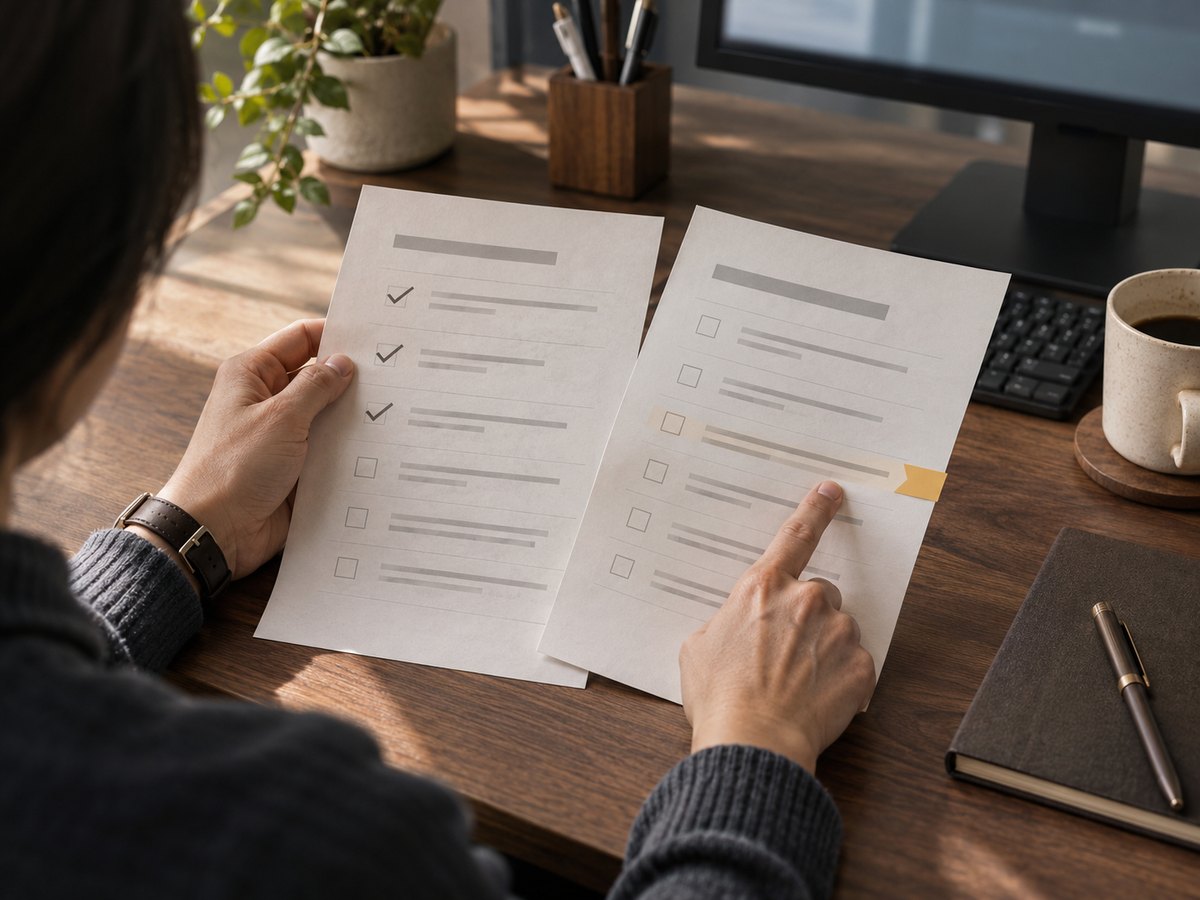
In the recorded worktree, the committed filter still matches revision 2. The old test only exercises a return awaiting a label. A separate, unstaged change edits the wording on the returns screen. Preserve that change while you inspect the query and its test.
The first useful check is a request for Open with one return in each of the three states. It should show both open returns and omit the refunded one. In this example, the check would fail because the return awaiting inspection is missing. Record that failure, then update the filter and rerun the check in the test environment.
If the filter already satisfies the approved rule, keep it and record the current result. If the local test cannot run, record the missing prerequisite and leave verification open. Send the next reviewer the observed result and the revision it belongs to.
Leave a handoff the next session can check
Keep this record in the ticket or alongside the plan. Write it at a checkpoint where the next person can tell what changed and where to begin.
Task and intended result
Approved spec and decision
Worktree, branch and commit
Staged and unstaged changes
Untracked files and owner
Completed work and evidence
Commands and results
Test environment
Checks still to run
Open findings and owners
Next action and approval
For each check, keep the actual result and the revision or working state tested. Link the relevant run or a short, redacted excerpt. If a previous session may have triggered a migration or external request, inspect the target system before retrying. Keep credentials and customer records out of the handoff.
In a fresh session, ask for a read-only pass first. Have the agent report the approved revision, what it found in the checkout, which evidence still applies and the smallest next check. That report gives you a concrete starting point for deciding whether it should proceed.
The brief-to-release guide shows where the handoff fits. The code review checklist covers evidence before merge. Our AI-assisted development process ties the build record to the revision a person reviews.
Start with a paid Blueprint, not a guess
One to two weeks to agree the scope, the risks and the measure of success — then a fixed price for the Build.